

Temperature, lighting, and humidity are three of the most important elements in a leopard gecko’s enclosure. Get them wrong, and your gecko’s health can quickly decline. Get them right, and your gecko will thrive, showing off natural behaviors, eating well, and staying active. In this guide, we’ll break down the correct leopard gecko temperature ranges, discuss their humidity needs, and explain how lighting (including UVB) affects their overall health. Whether you’re a new owner or fine-tuning your setup, this step-by-step approach will help you maintain the perfect environment year-round. A proper climate works hand in hand with an optimal leopard gecko tank setup to keep your pet healthy and comfortable.
Understanding Leopard Gecko Temperature Needs
Natural Climate & Its Impact on Captive Care
Leopard geckos come from arid and semi-arid regions in Afghanistan, Pakistan, and northern India. These areas experience warm days, cooler nights, and low humidity. In captivity, replicating this environment keeps your gecko healthy and reduces stress.
In the wild, they spend the day hiding in burrows and rocky crevices to avoid the midday heat, then emerge at night to hunt when temperatures drop slightly. This means they require both a warm basking zone and a cooler resting area in their enclosure.
Ideal Temperature Ranges for Different Tank Zones
A leopard gecko’s tank should have a temperature gradient, allowing them to move between warmer and cooler areas as needed:
| Tank Zone | Daytime Temp | Night Temp |
|---|---|---|
| Warm Side | 88–92°F | 70–75°F |
| Cool Side | 75–80°F | 68–72°F |
| Warm Hide Floor | 90–92°F | — |
These temperatures are best measured using digital thermometers with probes placed on both the warm and cool sides of the enclosure. Avoid stick-on dial thermometers, as they are often inaccurate.
If temperatures drop too low, digestion slows and appetite decreases. If they rise too high, your gecko may overheat—a dangerous situation that can be fatal.
Creating the Perfect Temperature Gradient
Warm Side vs. Cool Side Setup
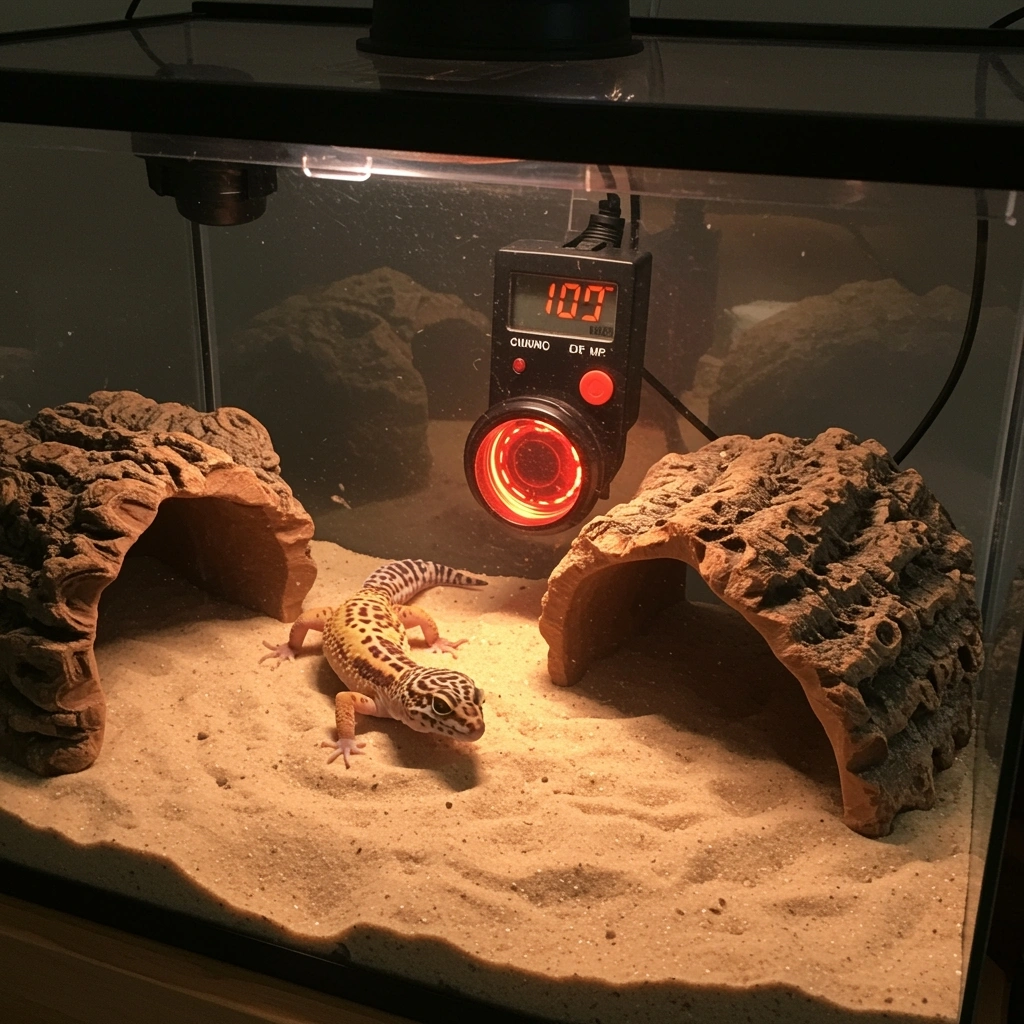
A well-maintained temperature gradient enables your leopard gecko to regulate its body temperature naturally by moving between warm and cool areas. The warm side should be maintained at 88–92°F during the day, while the cool side should stay between 75 and 80°F. At night, temperatures can safely drop to 70–75°F on the warm side and 68–72°F on the cool side.
Placing hides on both sides ensures your gecko can rest comfortably in its preferred temperature zone. The warm hide should be directly above or next to the main heat source to support digestion, while the cool hide provides a safe retreat from higher heat.
Best Heating Methods for Leopard Geckos
Leopard geckos absorb heat primarily through their bellies, making under-tank heating a top choice. Common heating methods include:
- Under-Tank Heaters (UTH) – Ideal for belly heat, placed beneath the warm side of the tank.
- Ceramic Heat Emitters (CHE) – Provide overhead warmth without light, perfect for nighttime.
- Radiant Heat Panels – Offer even, gentle heating in larger enclosures.
Always connect heating elements to a thermostat to prevent overheating, and monitor with digital thermometers. Overheating can be deadly, while underheating can slow digestion and weaken your gecko’s immune system.
Lighting Requirements for Leopard Geckos
Do Leopard Geckos Need UVB?
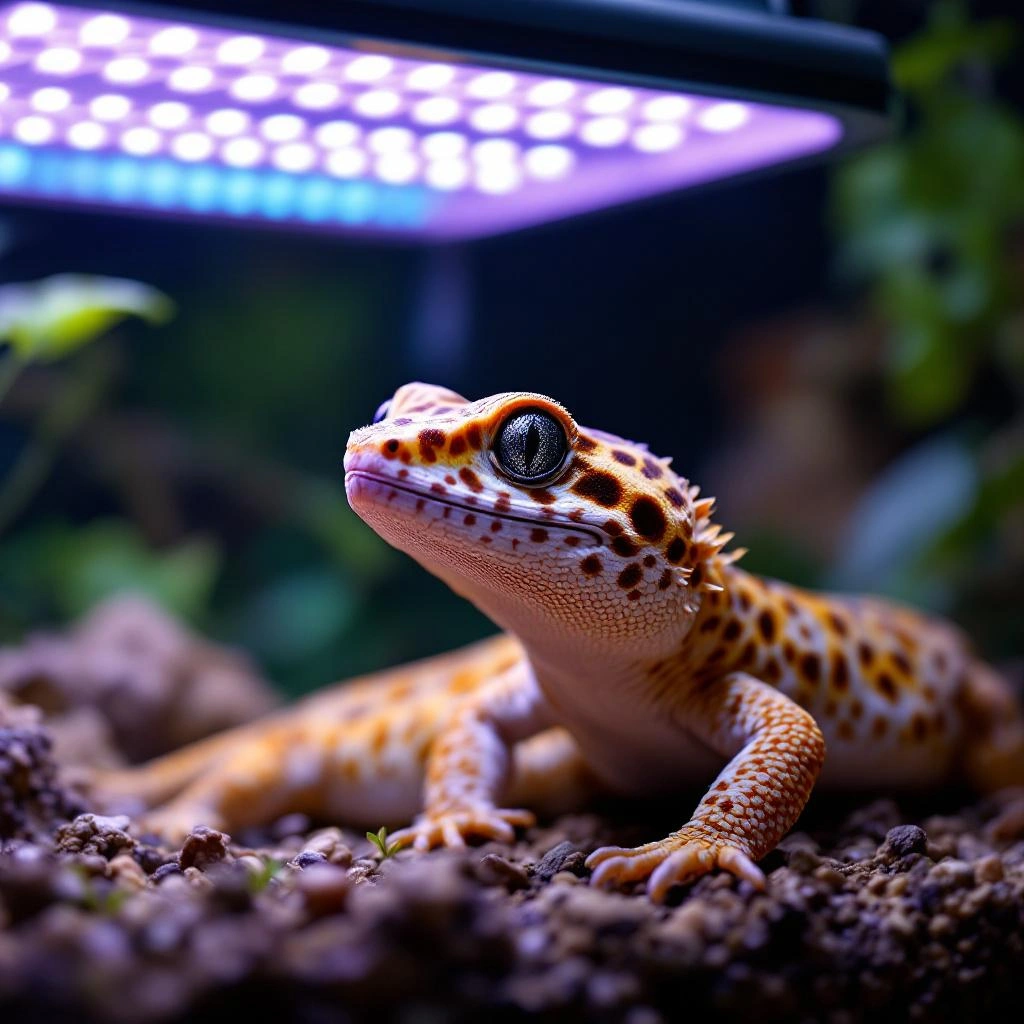
Leopard geckos are nocturnal, so they don’t require high-intensity UVB like many diurnal reptiles. However, low-level UVB (2–5%) can still benefit their health by supporting vitamin D3 synthesis, which improves calcium absorption and helps prevent metabolic bone disease.
While some keepers maintain healthy geckos without UVB by providing calcium with D3 supplements, offering UVB can be a more natural approach. Studies suggest that even nocturnal reptiles may occasionally bask at dawn or dusk to absorb UVB in the wild.
Photoperiod & Light Placement
A consistent day-night light cycle helps regulate your gecko’s natural rhythms. The standard photoperiod is:
- Spring & Summer: 12–14 hours of light
- Fall & Winter: 10–12 hours of light
If using UVB, place the light above the warm side of the enclosure and ensure there are no glass or plastic barriers between the bulb and the basking area, as these block UVB rays. The bulb should be replaced every 6–12 months, even if it still appears to emit visible light, because UVB output diminishes over time.
Avoid bright white lights at night, as they can disturb your gecko’s nocturnal behavior. If night heating is required, use ceramic heat emitters or infrared bulbs that don’t produce visible light.
Managing Humidity Levels in the Enclosure

Best Humidity Range for Leopard Geckos
Leopard geckos thrive in 30%–40% humidity within their main enclosure. This level replicates their natural arid environment while supplying enough moisture for healthy skin and successful shedding.
However, they also require a moist hide with humidity between 70%–80% during shedding periods. This localized humidity helps soften old skin and prevents stuck shed on toes, tail tips, and around the eyes.
How to Maintain Consistent Humidity
- Use a Hygrometer: Place it on the cool side of the tank for accurate readings.
- Moist Hide: Line with damp sphagnum moss or paper towels; mist lightly every 2–3 days.
- Avoid Over-Misting: Spraying the whole enclosure can cause humidity spikes that may lead to respiratory infections.
- Water Dish Placement: Keep it on the cool side to reduce evaporation and prevent excess moisture buildup.
By keeping the main tank relatively dry but offering a dedicated humid zone, you create the best balance for your gecko’s health.
Troubleshooting Common Heating & Humidity Problems
What Happens if Humidity is Too High or Low
If humidity is too high (above 50% for extended periods), leopard geckos can develop respiratory infections, bacterial growth in the enclosure, and skin problems. Prolonged dampness can also cause stress and reduce activity.
If humidity is too low (below 25%), your gecko may struggle to shed properly, leading to retained skin around the toes and tail tip, which can cut off circulation. This condition can quickly escalate into a serious health problem if not addressed.
The solution is to balance overall humidity at 30%–40% and maintain a moist hide for shedding cycles.
Is 95 Degrees Too Hot for a Leopard Gecko?
Yes, 95°F is too hot for most leopard geckos, especially on the warm side floor where they absorb belly heat. Prolonged exposure to this temperature can cause overheating, dehydration, and even heat stroke.
The ideal warm hide floor temperature should be 90–92°F at most. Anything higher can be dangerous. Always use a thermostat with heating equipment to keep temperatures safe and stable.
Temperature spikes often happen in summer, so check enclosure readings daily during hot weather and adjust heating devices accordingly.
Maintaining the right temperature, lighting, and humidity is the foundation of leopard gecko care. A proper temperature gradient supports digestion, lighting (including low-level UVB) promotes healthy vitamin D3 production, and controlled humidity ensures problem-free shedding.
By keeping daytime warm-side temperatures between 88 and 92°F, the cool side between 75 and 80°F, and humidity levels at 30%–40% with a moist hide during shedding, you’ll create a stable, healthy environment. Regular monitoring with thermometers and hygrometers ensures your gecko’s habitat stays safe year-round, reducing stress and promoting long-term well-being.
🦎 “Discover everything you need to know about leopard geckos – visit Reptizen today!”
FAQ Section – Expert Answers
What is the best temperature and humidity for a leopard gecko?
The warm side floor should be 88–92°F, the cool side should be 75–80°F, and nighttime temps can drop to 70–75°F. Humidity should remain 30%–40% with a moist hide at 70%–80% during shedding.
Do leopard geckos need a humid tank?
No. The main enclosure should stay relatively dry at 30%–40% humidity, but a localized humid area (moist hide) is essential for proper shedding and skin health.
What happens if a leopard gecko is too humid?
Extended high humidity above 50% can cause respiratory infections, skin problems, and bacterial growth in the enclosure. This can stress the gecko and lead to illness if not corrected.
Is 95 degrees too hot for a leopard gecko?
Yes. Prolonged exposure to 95°F, especially on the warm hide floor, can cause overheating and dehydration. Keep the warm hide at 90–92°F and monitor with a thermostat to prevent dangerous spikes.
Author

